Monday, 17 October 2016

Research- Practical Remake Activity ( Planning Decisions and Storyboard)

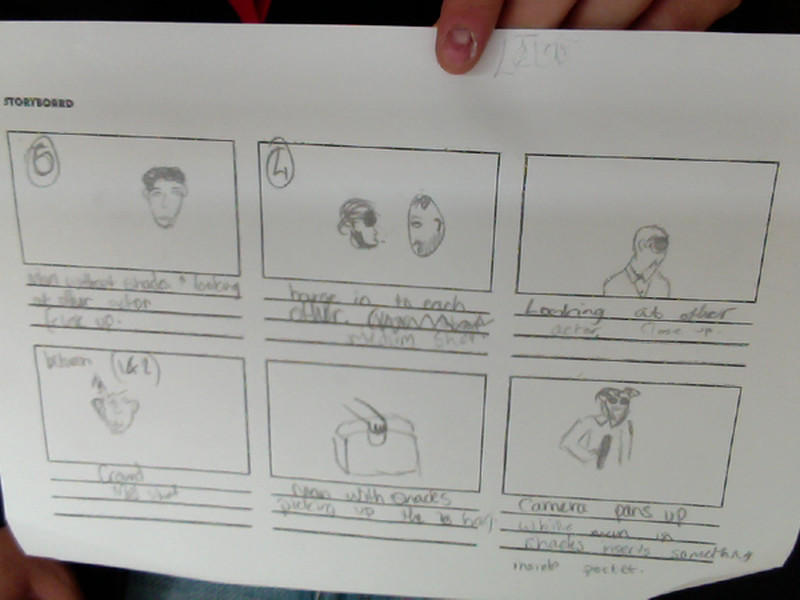
Planning Decisions and Storyboard for Film 'Collateral', this features Tom Cruise, Jamie Fox and Jason Statham.


We have created a storyboard and planning
decisions, we have also taken pictures of the props that are going to be used for this remake.

Research: Planing of remake


The planning of the remake for Collateral. We have created a storyboard and a shot list for the film opening to help us when we are filming. The props needed for this remake is shown above, two briefcases and shades. Two people will be taking part in the remake one in the role of Jason Statham and one in the role of Tom cruise.

Saturday, 15 October 2016

Research- What is Genre?

What is Genre?

Definition:

Genre is a way of categorizing films into what type it is. This categorizes different films which share similar or the same quality or characteristics. Some films may have different genres and as a result this targets a wider range of viewers to relate to. 

Types Of Film Genres:
  • Comedy
  • Horror
  • Teen
  • Musical
  • Action
  • Thriller
  • Western
  • Sci Fi
Action

Action film is a film genre in which the protagonist or protagonists end up in a series of challenges that typically include violence, close combat, physical feats and frantic chases. Action films tend to feature a resourceful hero struggling against incredible odds, which include life-threatening situations, a villain, or a pursuit which generally concludes in victory for the hero.
The genre is closely associated with the thriller and adventure films genres, and it may also contain elements of spy and espionage.

Horror

Horror is a film genre seeking to elicit a negative emotional reaction from viewers by playing on the audience's primal fears. Horror films often deal with viewers' nightmares, fears and terror of the unknown. Plots within the horror genre often involve the intrusion of an evil force, event, or personage into the everyday world. Prevalent elements include ghosts, vampires, werewolves, demons, vicious animals, evil witches, monsters, zombies, cannibals, psychopaths and serial killers.
The genre can be sometimes associated with comedy, adventure and action.

Comedy

Comedy is a genre of film in which the main emphasis is on humor. These films are designed to make the audience laugh through amusement and most often work by exaggerating characteristics for humorous effect. Comedy, compared to other film genre puts much more focus on individual stars, with many former stand-up comics transitioning to the film industry due to their popularity.
This genre may be associated with action, horror, sci-fi and romance.


Research- What are the 4 different types of film openings?

4 Different Types of Film Openings.
4 Different Types: Titles on a blank screen, Titles on still images,Titles over moving images, Titles using animation or motion.
Titles over Moving Images


Main Conventions and Reasons for use:

  • Moving Imagery.
  • There is usually no dialogue in this type of film opening.
  • Images presented are a type of metaphor for the film.
  • Images in a screen.

Examples of Specific Title Sequence:

  • Rear Window.                                                                   ^Rear Window Opening^
  • City of God.

Titles using Animation or Motion


Main Conventions and Reasons for use:

  • Moving Images blended with text.
  • They are integrated together with other images.

Examples of Specific Title Sequence:

  • Casino Royale.
  • Catch me if you can.
Titles on a Blank Screen

Main Conventions and Reasons for Use:

  • Simple graphics used.
  • Easy to use.
  • Used on a blank background.
  • Typefaces on a blank background.

Examples of Specific Title Sequence:

  • Psycho.
  • Pulp Fiction.
Titles on Still Images

Main Conventions and Reasons for Use:

  • Moves around the screen.
  • Needs more than one type of media to create.
  • Text is shown differently in different designs.

Examples of Specific Title Sequence:

  • Wimbledon.
  • Enter the Void.


Favorite film and analyse the type of title sequence it uses.


Favorite Film 


The type of title sequence it uses, is quite horrifying and sinister, as it uses small aspects of the movie of a rope hanging of a tree signifying death. The colours is really effective as they used a grey scale effect adding to the horror theme. The uses of newspapers is really effective as it tells us this is based to a true story, which was a smart way of showing it.

Credit Order


  1. The Perron family 
  2. The Warren family
  3. Directed by James Wan
  4. Written by Chad Hayer & Carrey W. Hayes 
  5. Produced by Tony DeRosa-Grund Peter Safran Rob Cowan
  6. Executive producers,Walter Hamada Dave Weustadter
  7. Director of photography John R. Leonetti, ASC
  8. Production Designer Julie Berghoff
  9. Edited by Kirk Morri
  10. Patrick Wilson
  11. Vera Farmiga
  12. Ron Liuingston 
  13. And Lili Taylor
  14. Joey King, Shanley Caswell, Hayley McFarland, Mackenzie Foy
  15. Shannon Kook, John Brotherton, Sterling Jerins 


What is the purpose of a title sequence and film opening?


Why are title sequences used?

To credit the cast and crew involved in the production of the Film/TV show and give them recognition for their work. It can show the importance and status of the people that worked on the film. It also can give the genre convention for the Film/TV show so that people watching have an idea of what the Film/TV Show will be like and include.

Billing order

The billing refers to the order in which the actors involved in the films names are presented and where they come, whether it is before the movie title or after. The term top billing is therefore referring to who's name has been top placed, first or highest in either as title sequence or movie.

Film Titles

Film titles almost always incorporate the logo of a company that has aided them. This advertises the company and is why there are so many recognizable company logos. They can also establish an expectation for the audience as to what the film would be like, for example, if you see a Warner bros logo, it's most likely the film will have a lighter tone(depending on how the logo is shown).


In some cases these institutions edit their logos to suit the genre of the film for example, universal studios may make their logo black and white for a Horror film.


Research: what makes a good title sequence according to kyle cooper?

Research: what makes a good title sequence according to kyle cooper?

url.jpg
Kyle Cooper is a very famous film opening designer and director. Kyle Cooper has been credited as the man who single-handedly revitalized the main title sequence as an art form. His groundbreaking title sequence for Se7en (1995) changed the way we look and think about title design today and is arguably the most imitated main title ever made. The Se7en title sequence was hailed by New York Times Magazine as “One of the most important design innovations of the 1990s”.He has made many of the well known film openings such as Spiderman. He has directed over 150 film title sequences.

According to kyle cooper, location and props are very important. Kyle Cooper believes that using handmade materials is better as it shows originality and suggest an imperfect atmosphere. In addition, when making a film opening sequence, having the actor act in front of a green screen can be a lot more effective than filming in a real location. Not only does this save time but also can be done at any moment as the weather isn't taken into consideration.The opening sets an expectation for the rest of the film and makes you forget about everything besides the upcoming movie so the audience has a very important aspect of a movie.

url.jpgKyle cooper stated that a film opening must relate to the film and it needs to be relevant to the characters and the story line. A lot of good title sequences relate to a certain character's back story, it usually reveals an important part of their life. He comments on the fact that 'some films need a first scene and the best titles become the first scene of the movie.' Title sequences are important because they make you thrilled to be in this theatre at that very moment, getting ready to see this movie. It makes the audience glad that they are nowhere else in the world except where they are at that try moment, getting ready to see something amazing.

He states that the font is extremely important as it defines the genre of the movie. The font of the movie needs to link well with the genre of the movie, for example a horror movie would need to include dark chilling writing to create a frightening atmosphere. If the font doesn't match the genre of the movie it can put off the audience, therefore you wouldn't use bright happy fonts in a horror movie as scary feeling would be lost. The typography should portray the story line, it should not be an afterthought as it is very important for a movie.